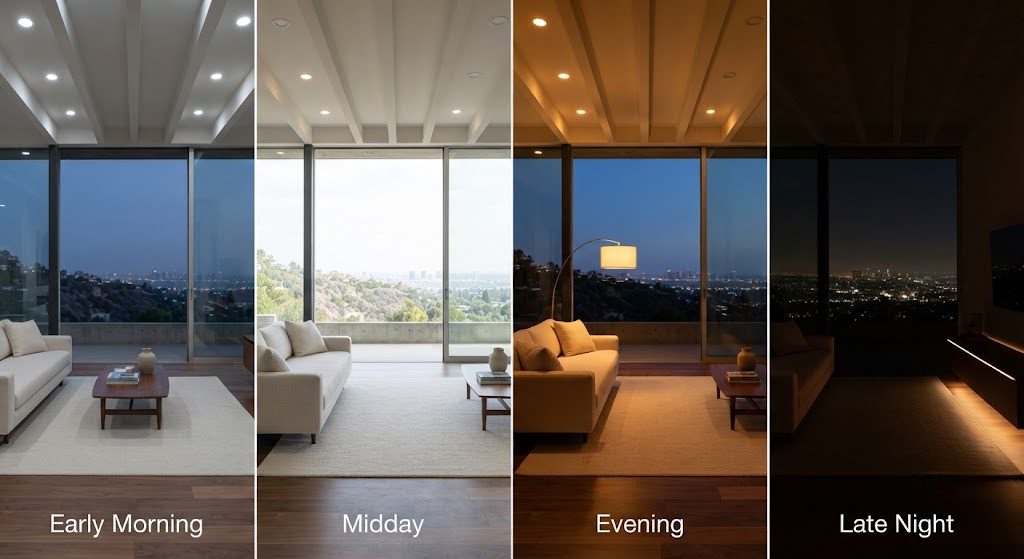
Natural light changes color every hour of the day. It starts cool and blue at dawn, climbs to a neutral white at noon, and sinks into amber and deep orange by sunset. For most of human history, our bodies used that shift as the master clock for sleep, alertness, and metabolism. Then we invented drywall and started spending 90% of our time under fixed-color bulbs. The result isn't catastrophic, but it's a slow tax on how well we sleep and how sharp we feel. Tunable-white lighting — the ability to shift a fixture's color temperature from warm candlelight to cool daylight — lets a house reclaim that natural rhythm. The trick isn't the bulb. It's the schedule.
What Tunable-White Lighting Actually Is
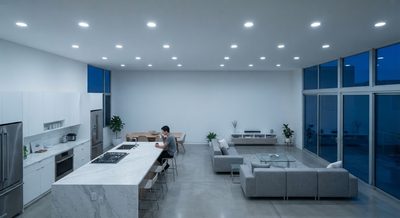
A tunable-white fixture contains two sets of LEDs: one set produces a warm amber light, typically around 2700K, and the other produces a cool blue-white light, around 5000K or higher. By mixing the output of those two channels, the driver can hit any white point along the blackbody curve between those extremes. This is not RGB. There are no purple or green party modes. This is strictly white light that shifts from warm to cool, which makes it invisible to guests and transformative for residents.
How Color Temperature Affects Your Body
Morning light with a high blue content — think 5000K to 6500K — suppresses melatonin and raises cortisol. It tells the brain to wake up, and it's the single most powerful circadian signal we have. Evening light below 3000K does the opposite. It allows melatonin to rise, preparing the body for sleep. A fixed 3000K recessed ceiling, which is the default in 95% of American homes, does neither job well. It's the beige of lighting: inoffensive, ubiquitous, and physiologically boring.
Programming the Curve
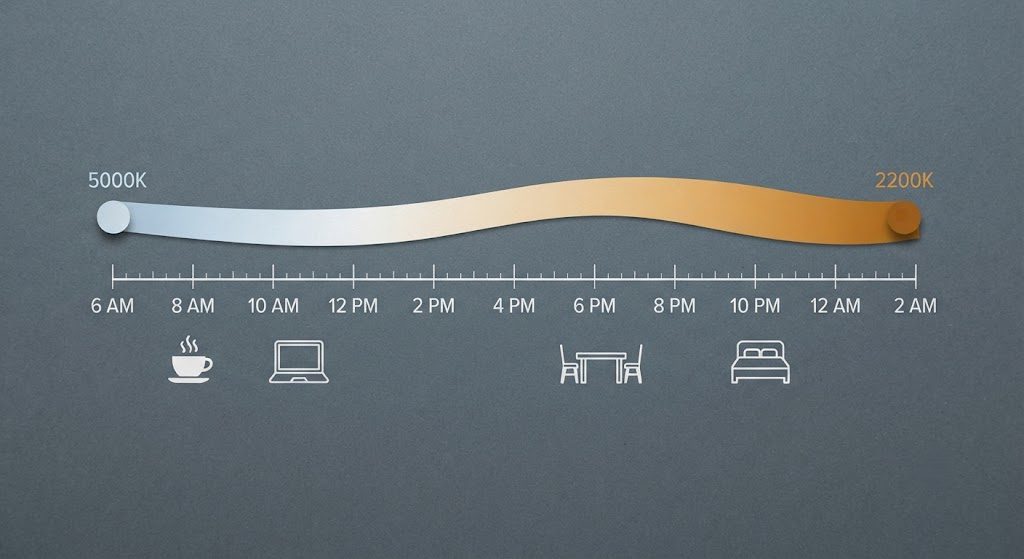
A circadian schedule maps color temperature and brightness to the clock, and to the season. I don't program every home the same way, but the skeleton is consistent. Wake-up begins thirty minutes before the alarm with a 10% fade-in at 2700K, warming to 4000K by the time feet hit the floor. Mid-morning to late afternoon runs at 4000K to 5000K at full brightness — ideal for task work. By 6 p.m., the temperature drops to 3000K, and by 9 p.m., it's at 2400K at 40% brightness. After midnight, if any light triggers — a hallway motion sensor, a bathroom visit — it fires at 2200K and 10%, just enough to navigate without fully waking.
The Astronomical Timeclock Advantage
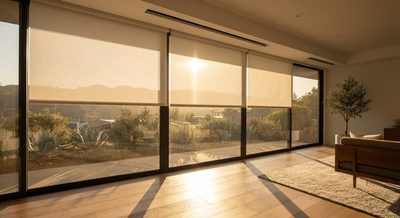
Household routines shift with the seasons, and a proper circadian schedule uses an astronomical timeclock tied to the processor's geographic location. In December, the evening warm-down starts earlier. In June, it holds cooler temperatures later. Pair that with motorized shade positions from the same timeclock, and the house begins to feel like it breathes with the weather outside.
The Override That Saves the System
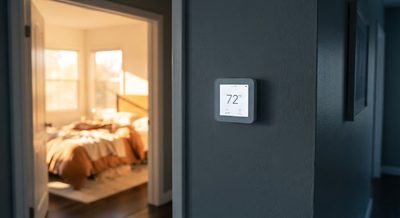
Every circadian schedule must include a manual override, because life is not an algorithm. I put a single keypad button in the kitchen labeled "Bright." It jumps the entire house to full 4000K for thirty minutes, then fades back to the circadian curve. Clients use it for late-night homework sessions, a sick kid, or cleaning up after a dinner party. Without that button, the system feels like a prison. With it, the curve stays in control 95% of the time, and the homeowner decides the other five. That's the balance a good integrator designs for.
The circadian house isn't a luxury wellness trend. It's the logical endpoint of giving a lighting system a real job. If your lights can shift color, but they're not following a schedule, you've paid for capability you're not using. Fix that before you buy another fixture.