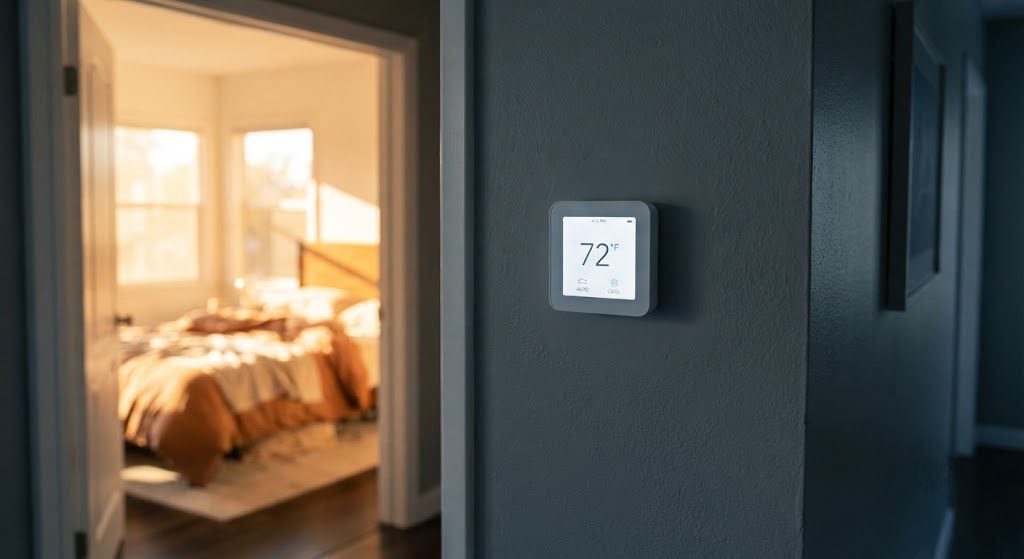
The single thermostat is the most common piece of smart home technology in America, and in most houses, it's also the most overrated. A thermostat reads the temperature in one spot—usually a hallway or a living room—and uses that single data point to condition the entire house. If the hallway is 72 degrees, the system assumes everywhere else is 72 degrees. The master bedroom with west-facing glass at 4 p.m.? The converted garage office with one vent and an underpowered duct? The thermostat doesn't know they exist. And it's not because the thermostat is dumb. It's because one sensor cannot manage a multi-room building.
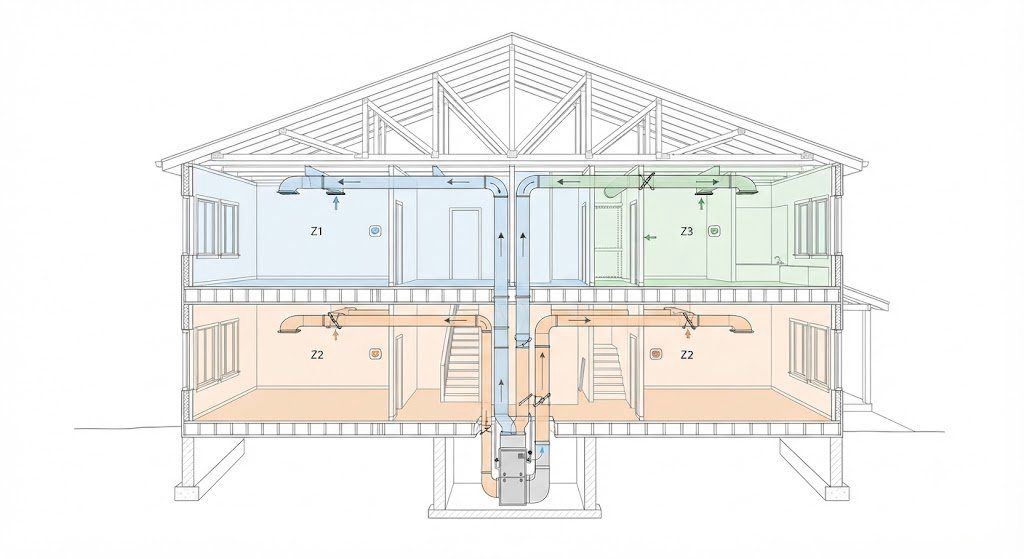
Zone control fixes this. It divides the house into separate climate zones, each with its own thermostat or remote temperature sensor, and each with a motorized damper in the ductwork that opens and closes on command. When the master bedroom calls for cooling, only the damper serving that zone opens. The rest stay closed. The system conditions the room that needs it, not the one the thermostat happens to live in.
What Zone Control Actually Requires
Retrofitting zone control into an existing house is a different project than designing it into a new build. In both cases, the core components are the same: a zoned HVAC system or a zone control panel added to the existing air handler, motorized dampers installed in the main trunk ducts, and individual thermostats or sensors in each zone. The ductwork has to be accessible, and in a retrofit, that often means opening drywall in the ceiling or soffits.
New Builds: Start With a Blank Canvas
In a ground-up build, I spec zone design before the HVAC contractor runs a single duct. A typical two-story home in Los Angeles gets at least three zones: one for the upstairs sleeping area, one for the main living level, and one for the primary suite if it sits on a corner with two exterior walls. Larger homes add zones for a home office, a gym, or a guest wing. The incremental cost of dampers and extra thermostats during construction is reasonable—usually a few thousand dollars. The cost of adding them later, after drywall and paint, multiplies quickly.
Retrofits: When It's Worth the Surgery
Not every house needs zoning. For a single-story ranch under 2,000 square feet with an open floor plan and decent insulation, a well-placed single thermostat can do the job. The trouble starts when you have two stories, or a room with a dramatically different solar load, or a converted space that was never properly ducted. I look for the complaint: if one room is always hot at 4 p.m. and another is always cold in the morning, a single thermostat is the root cause. Adding a zone to that problem room—even if it means cutting into the ceiling—pays back in comfort every single day.
The Integration Layer That Makes It Smart
Zone dampers and multiple thermostats give you control. The smart home processor gives you automation. That's where zone control stops being about HVAC and starts being about how the house responds to your life.
Occupancy-Driven Conditioning
In a fully integrated system, occupancy sensors already installed for lighting and security can talk to the HVAC. When the security system arms in "Away" mode, the processor sets all zones to an energy-saving setback. When the master bedroom motion sensor detects movement at 6 a.m., that zone warms or cools before the alarm goes off. The guest wing stays at setback unless the guest room door sensor registers activity. A house that conditions only occupied spaces is a house with a lower energy bill and no arguments about the thermostat.
The Bedtime Handoff
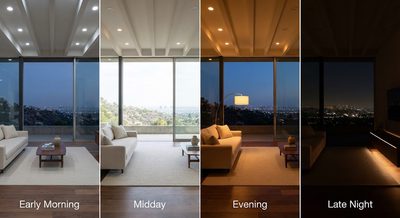
One of my favorite climate scenes coordinates with the lighting and shade schedule. At 9 p.m., the main living zone drops to 65 degrees in winter or 78 in summer—it's empty. The master suite zone, meanwhile, has been pre-conditioning for the last 30 minutes to hit 68 degrees (winter) or 72 (summer) by the time the homeowners walk upstairs. The bedroom is comfortable, the downstairs isn't wasting energy, and nobody touched a thermostat. That's not a Nest. That's a system.
The smart thermostat is a fine product. But a smart thermostat in a dumb duct system is still a dumb system. If you're building new, zone the house from day one. If you're renovating and opening walls anyway, spend an hour with your HVAC contractor looking at the trunk line. The decision you make about dampers will determine whether your house is comfortable for the next twenty years. Everything else is just a display on the wall.