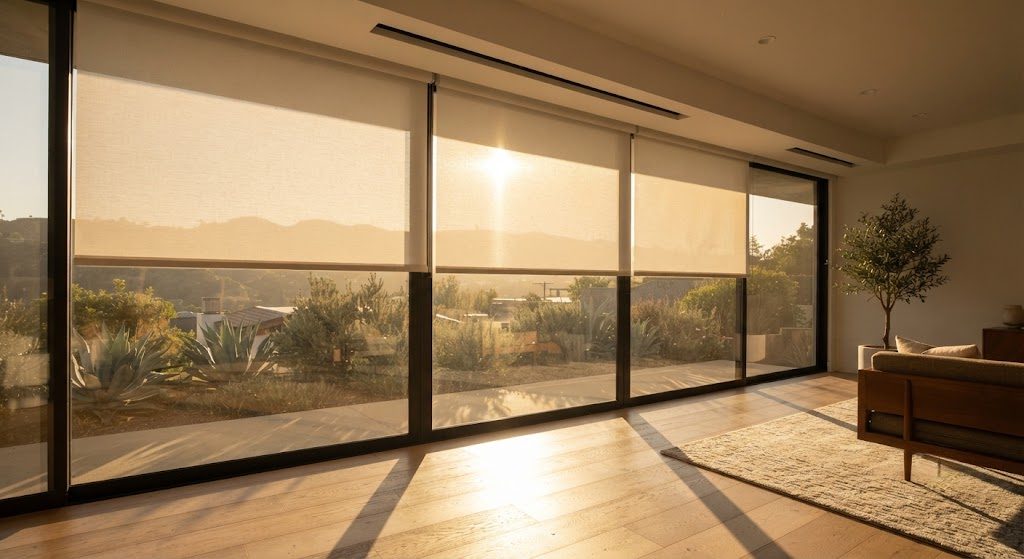
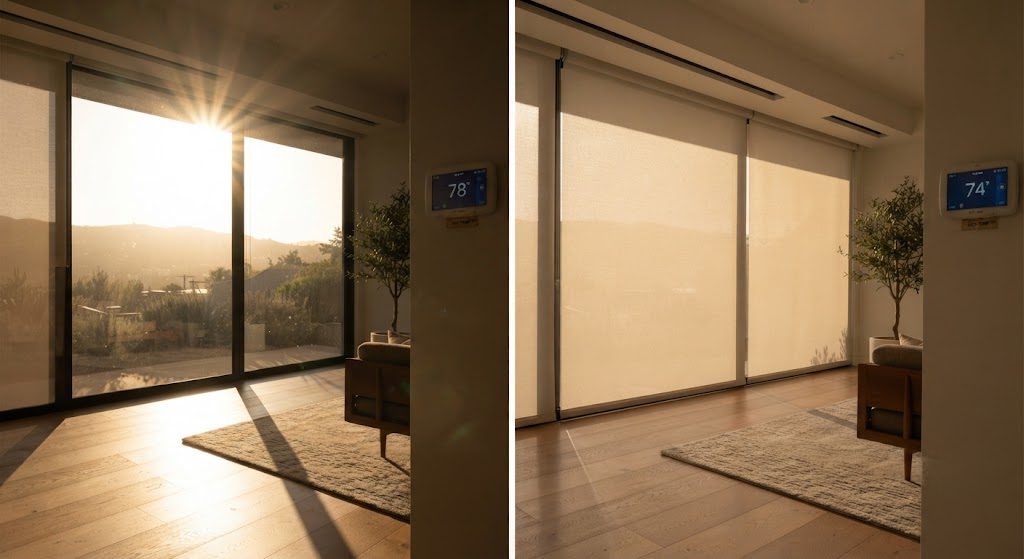
I have a rule about motorized shades: if I can spec them on only three windows in an entire house, I spec them on the west-facing ones. In Los Angeles, the afternoon sun doesn't knock politely. It pounds through every inch of unprotected glass from 3 p.m. until sunset, turning a gorgeous open-plan living room into a solar oven. A good motorized shade on a west exposure doesn't just add privacy. It changes the thermal behavior of the entire building envelope.
The line item still surprises people. Motorized shades cost more than manual ones. But when I walk a client through what they actually deliver over a decade of living in the house, the math shifts. This isn't a decorative upgrade. It's a functional subsystem that earns its keep in three very specific ways.
The Real Return on Motorized Shades
The initial reaction to the shade quote is almost always the same: a raised eyebrow and a question about whether we can just do manual ones. I could. But manual shades on large windows, especially high ones, get adjusted exactly once—when the homeowner realizes they can't reach the cord. After that, they stay down for three years. Automation turns shades from ignored window coverings into active components that respond to the sun, the clock, and the security system.
Energy Payback You Can Measure
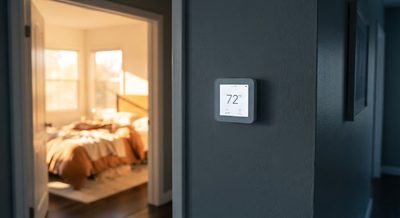
Southern California Edison rates are not going down. A west-facing window without shade treatment can add thousands of BTUs of heat gain per hour in summer. Your HVAC fights that heat with cold air. If the shade drops automatically when the sun angle hits that window, the air conditioner works less. I've seen zoned systems where the master bedroom, which faces west, would call for cooling at 4 p.m. every day until we automated the shades. After automation, the zone stayed within two degrees of setpoint without the compressor kicking on until sunset. That's real savings, repeated every afternoon for the life of the house.
UV Protection That Preserves the Interior
This is the argument that lands hardest with clients who've invested in flooring, art, or custom millwork. Southern California sun at 34 degrees latitude will bleach a hardwood floor, fade an oil painting, and turn a vintage rug into a pale ghost of itself inside of five years. Motorized shades with a 3% or 5% openness fabric cut UV exposure by over 90% during peak hours, without blocking the view entirely. Pair that with an astronomical timeclock that knows when the sun actually hits each window, and the shades protect the interior without you ever touching a button.
Automation Without the Fuss
A shade that requires a phone app is a chore. A shade that runs on a schedule is a background service. The difference is a homeowner who loves the shades versus one who forgets they have them.
The Privacy Schedule People Actually Use
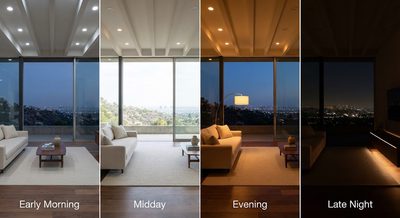
In every project, I program a privacy scene that runs at sunset minus 30 minutes. The shades on every first-floor window drop to fully closed. Upstairs, the master suite shades close at the same time. The guest room stays open until midnight—nobody's in there most nights. This schedule runs 365 days a year, and my clients stop noticing it exists after week two. That's the goal. The house handles privacy so the people don't have to walk around closing blinds like it's 1957.
One Scene They Never Turn Off
I install a "Goodbye" keypad by the garage entry in almost every home. It arms the security system, shuts off the lights, sets back the HVAC, and drops every motorized shade in the house. Five seconds after the last person walks out, the house is buttoned up tight. The first time a client comes home to a cool, shaded house on a 95-degree day, they understand the line item. The shade motor just paid for a month of summer afternoons.
Motorized shades are the feature I've stopped trying to justify on paper. The spreadsheet never tells the full story. The full story is the client who calls me three months after move-in and says, "I didn't know a house could do this." They're not talking about the shade motor. They're talking about a room that was never comfortable at 4 p.m. before, and now it just is. That's not a luxury. That's the house doing its job.