When homeowners ask me for the best home security system, they usually mean a camera, a doorbell, and an app that sends alerts. That is understandable, but it is not quite the right question during a renovation or new build. Security is a system of detection, communication, lighting, access control, and response. The best result is the one that works quietly every day, remains useful after the novelty fades, and does not make the house feel like a small commercial facility.
Start with the house, not the hardware
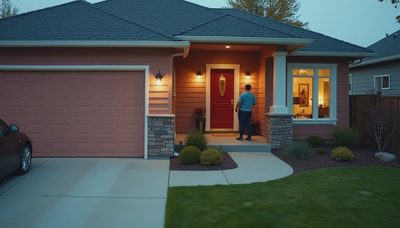
A security plan should begin with the property itself. Walk the perimeter at night, note every exterior door, and identify windows that are hidden from the street or from neighboring homes. A hillside lot in Los Angeles has different exposure than a compact Silver Lake bungalow. A rear gate, detached garage, basement stair, pool equipment area, or side passage can matter as much as the front entry.
During design, divide the property into practical zones. The public-facing zone includes the front walk, driveway, and front door. The private perimeter includes side yards, rear doors, and accessible windows. Interior zones include bedrooms, hallways, offices, and service areas. This approach prevents the common mistake of installing a camera at the front door while leaving the actual approach to the house unobserved.
The best home security system uses different sensors for different jobs. Door and window contacts report opening. Glass-break sensors listen for a particular acoustic pattern. Motion sensors can confirm movement, but they need careful placement around pets, HVAC airflow, and direct sunlight. A camera provides visual context, while a water or smoke sensor addresses risks that have nothing to do with an intruder.
Rough-in is where the important decisions happen
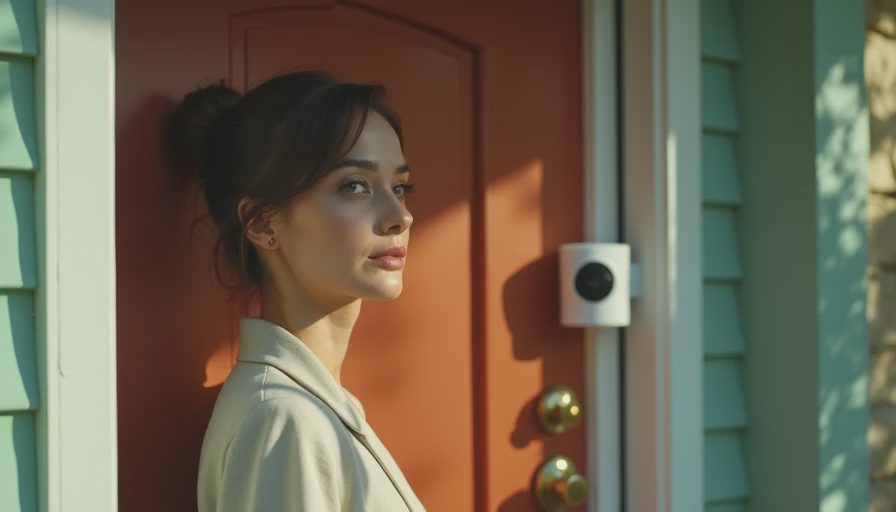
If the walls are open, install pathways before choosing every device. A wired connection is generally more dependable than a battery at a critical location, and it avoids the maintenance cycle of climbing a ladder to replace batteries. I like planning low-voltage cabling to exterior cameras, the front entry, structured wiring locations, network access points, and any future gate or intercom.
That does not mean every sensor must be wired. Wireless contacts are often sensible for existing walls, historic details, or a renovation where opening finished surfaces would create more disruption than value. The useful distinction is not wired versus wireless as a matter of ideology. It is deciding which components deserve stable power, network capacity, and a serviceable route back to the equipment location.
Reserve a sensible equipment area with ventilation, service access, and battery backup. Do not bury the security controller behind a finished cabinet with no room to reach it. The same rack or closet may also serve the network, cameras, audio, lighting, and climate systems. Label every cable at both ends. Three years later, that small discipline can save an afternoon of troubleshooting.
Cameras are for context, not constant surveillance
A camera should answer a question. Who is at the gate? Did a package arrive? Is the side door open? Is someone in the driveway after dark? If the image does not help answer a real question, the camera is probably in the wrong location.
Avoid pointing cameras directly into neighboring homes or bedroom windows. Aim for entry paths, gates, driveways, and service approaches, and use privacy masking where the platform supports it. Night performance matters more than a dramatic daytime specification. A wide field of view can be useful, but excessive width may make a person too small to identify. Good lighting often improves practical results more than adding another camera.
For the best home security system, decide how recordings are stored before installation. Cloud storage is convenient and can simplify remote access. Local recording gives the homeowner more control and can remain useful during an internet outage, but it introduces storage, retention, and maintenance decisions. Keep the retention period purposeful. Saving every frame forever is not automatically better security.
Access control should be simple enough to use
A smart lock can be valuable when it replaces hidden spare keys and creates individual codes for household members, cleaners, or contractors. It becomes less valuable when the family keeps using a mechanical key because the app is slow or the code rules are confusing. Choose an entry method that works when a phone is unavailable, the battery is low, or a guest arrives unexpectedly.
The same principle applies to alarm arming. A single, clearly labeled “Away” action is better than a complicated sequence that nobody remembers. Night mode should protect the perimeter while allowing movement to bedrooms and bathrooms. A well-designed system can announce an open garage door or side gate without turning every harmless event into a dramatic alarm.
The best home security system also respects privacy inside the home. Interior cameras are rarely necessary in bedrooms or private spaces. If one is appropriate for a foyer, nursery, or main living area, define when it is active, who can view it, and how recordings are deleted. Security should increase a household’s control, not create a second source of anxiety.
Connect security to the rest of the smart home
Integration is useful when it changes the response, not merely when it puts another logo in the same app. If an exterior door opens after midnight, pathway lighting can come on at a low level. If smoke is detected, lighting can turn on throughout the escape route. If the system is armed away, selected lights and shades can follow an occupancy schedule without pretending to reproduce every detail of daily life.
Avoid automations that create confusion. A motion event should not activate bright lights directly outside a bedroom at 2 a.m. A camera notification should not arrive every time a tree moves in the wind. Use time windows, zones, confirmation events, and sensible delays. The best home security system feels calm because it distinguishes between information, warning, and emergency.
Professional monitoring is another design choice rather than an automatic requirement. Self-monitoring can work for a homeowner who responds reliably to phone alerts and has a backup plan. Professional monitoring provides an escalation path when the homeowner is asleep, traveling, or unable to respond. Review the communication path, power backup, cancellation terms, and local emergency procedures before signing up.
A practical commissioning checklist
Before the project is complete, test every door and window contact with the system armed and disarmed. Walk each camera view during daylight and after dark. Confirm that faces are not washed out by porch lights and that license plates are not the only thing visible in the frame. Unplug the internet connection and verify what still operates locally. Then test the battery backup and document how long the system remains available.
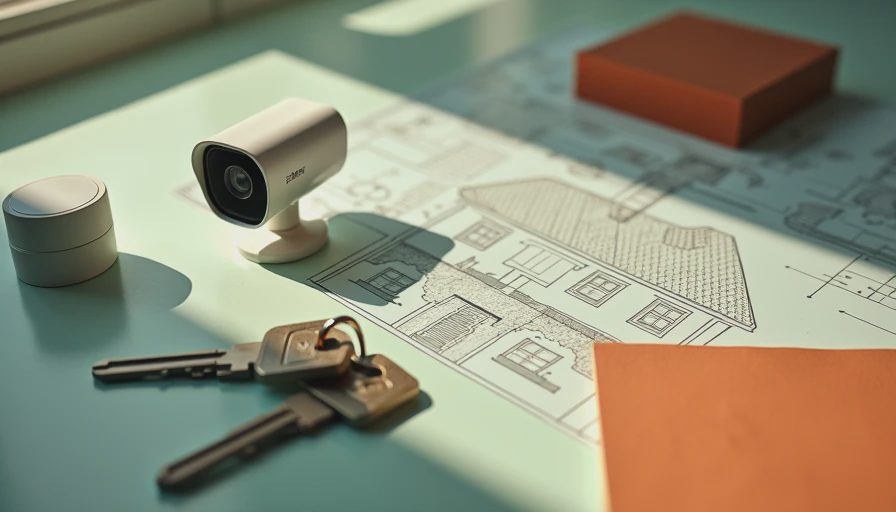
Ask the installer to demonstrate user creation, temporary access codes, notification settings, camera sharing, and alarm cancellation. Have them explain what happens if a sensor fails. Save a current floor plan showing device locations, cable paths, network equipment, and shutoffs. That record is useful for future remodeling and protects you from depending on someone’s memory.
A homeowner comparing the best home security system options should also look beyond the first-year equipment price. Consider subscription fees, battery replacement, service visits, network upgrades, and the cost of replacing a discontinued hub. A modest, well-supported system can outperform a feature-heavy platform that no one wants to maintain.
The right system disappears into daily life
The strongest security design does not announce itself constantly. It gives clear information, lights a path when needed, records useful context, and creates a dependable response when something serious happens. It also leaves room for future changes, whether that means a new gate, a remodeled garage, or integration with lighting and climate control.
In a renovation, plan security while electrical and low-voltage decisions are still flexible. In an existing home, start with the most important entry points and improve the network before adding a wall of gadgets. The best home security system is not the one with the longest feature list. It is the one that matches the architecture, the household’s habits, and the level of attention the owners will realistically give it five years from now.