A z wave switch is not the exciting part of a remodel, but it is often the part that decides whether the house feels coherent five years later. When I walk a project in rough-in, I am not looking for novelty. I am looking for a control point that works at the wall, makes sense from the doorway, and does not create a mess behind drywall. That is why I treat a z wave switch as a planning decision, not a gadget decision. If the room needs one clean way to control light, shades, or a scene, this is where the conversation starts.
Where a smart wall control actually belongs
The best locations are the ones people touch without thinking: entries, kitchens, primary bedrooms, hallways, stair landings, and exterior doors. In those spots, the problem is not whether the room is technically connected. The problem is whether the room is easy to use when your hands are full, the sun is low, or you are half asleep. A z wave switch works well when a room has one or two lighting layers and the goal is straightforward on-off or dimming from the wall, not a dozen app taps. In other words, put the intelligence where the behavior is repetitive.
For larger rooms, I think in terms of zones, not fixtures. If a great room has cans, pendants, and sconces, one wall control can still make sense if the scenes are mapped to how people actually live there. The mistake is trying to solve a whole-room lighting problem with a single decorative device that nobody understands. The house should feel simpler, not more technical.
What to wire before drywall closes
If you are still opening walls, the smartest money is usually on the hidden part of the job. A z wave switch is only as reliable as the wiring behind it, and that starts with a neutral in the box, proper box depth, and clean line and load identification. If the circuit is a three-way or four-way, the path needs to be planned before the drywall crew makes everything look easy. After finishes are up, the cost is not the device. The cost is the decision to open a painted wall because the box was cramped or the traveler logic was never thought through.
I also like to know what the load actually is. LEDs, exhaust fans, incandescent leftovers, and mixed circuits all behave differently. A dimming load that works beautifully on paper can look cheap in the room if the lowest level is unstable or the switch chatters. This is why rough-in coordination matters. An electrician can make a box live in minutes, but a system that feels intentional takes a little more thinking at the start.
Where simpler is the better answer
Not every wall needs a smart device. Closets, storage rooms, mechanical spaces, and some guest rooms are often better served by a plain switch that is impossible to confuse. In those places, a person wants light immediately, not a menu. I say the same thing about certain lamps and small secondary spaces: do not add complexity just because the house is being upgraded. Complexity is useful only when it removes friction later.
This is where a lot of projects drift. Someone wants every room to have the same hardware, so every room gets the same hardware, even if the use case is different. That is backwards. A well-planned house mixes control types on purpose. The rooms that earn a z wave switch are the rooms where the wall control needs to do more than flip a bulb. The rest can stay simple, cheaper to maintain, and easier for guests to understand the first time they walk in.
The failure modes that show up later
The problems that appear in year three are rarely dramatic. The switch still powers on, but the scene no one remembers becomes dead weight. The load was changed to a different lamp and the dimming curve is now wrong. A roommate or contractor replaced a bulb with something incompatible and the whole room feels inconsistent. Or the wall control is technically fine, but the labeling never got finished, so the paddle no longer matches the room's actual behavior.
The other issue is network discipline. A connected wall device does not live alone. It depends on a stable mesh, decent placement, and enough repeaters in the right places. If the house is underbuilt on the infrastructure side, the symptom is not usually a catastrophic outage. It is lag, unreliability, and people giving up on the advanced functions. That is the real cost: when the control layer becomes so annoying that everyone goes back to the old habits.
How I think about room by room control
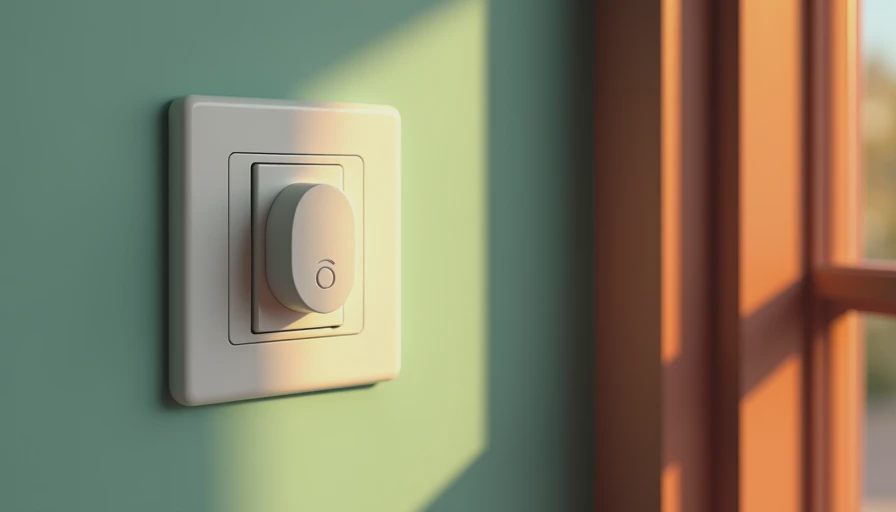
In a kitchen, the right move is usually a mix of direct light and scene control. You want quick access at the door, but you also want the island, task lighting, and perimeter light to behave as one system when the room shifts from breakfast to dinner. In a primary suite, the wall control needs to be intuitive in the dark. In an exterior entry, it needs to make the house feel safe and obvious the moment someone steps inside. A z wave switch can fit all three, but only if the room logic comes first.
The same logic applies to hallways, staircases, and open-plan living areas. If the path from one room to the next has different lighting moods, the control strategy should keep those transitions smooth instead of calling attention to itself. People should not have to remember which button means what. They should feel the room change and move on. That is the mark of a system that was planned instead of assembled.
A clean way to decide during design
When I am deciding whether to specify a z wave switch, I ask a simple question: will this wall control reduce friction every day, or is it just adding another thing to learn? If the answer is yes, it belongs in the plan. If the answer is no, I would rather keep the wall hardware simple and put the intelligence somewhere else in the system. That is how you avoid a house full of controls that look modern on install day and annoying by the time the furniture arrives.
If you are in the middle of a remodel or a new build, make the decision while the walls are open and the room is still a drawing. That is the moment to sort out neutral, box depth, circuit behavior, and the real way the room will be used. Done that way, a z wave switch becomes a small part of a larger system that feels calm instead of complicated.