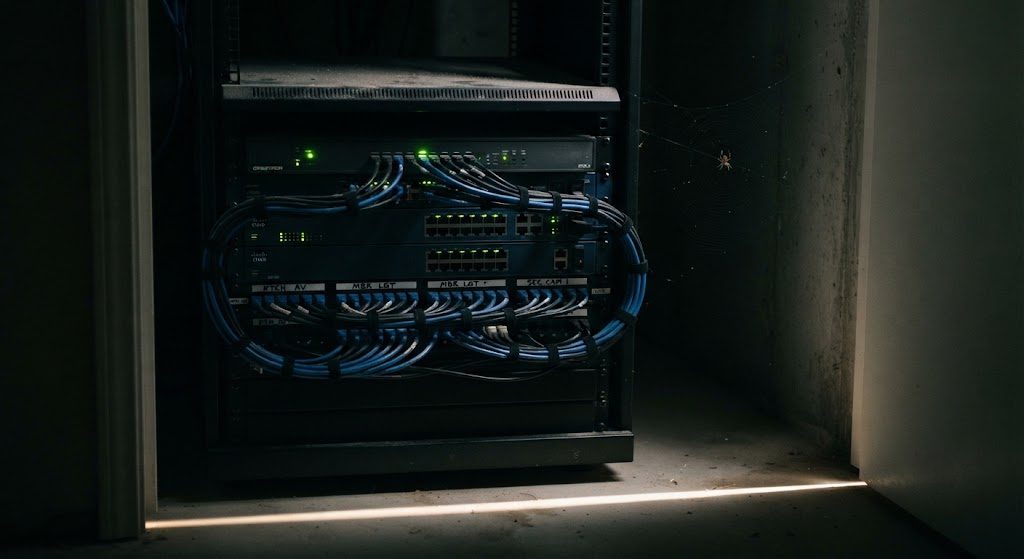
I've been called to fix smart homes that cost more than the median house in Los Angeles. The hardware was premium. The wiring was clean. The devices powered on. And the homeowners hated every square inch of it. Lights that turned on at 3 a.m. for no reason. Scenes that worked on Tuesday and broke on Thursday. Keypads that required a PhD to operate. In every case, the technology was blameless. The commissioning was the culprit.
Commissioning is the last mile of a smart home installation, and it's the mile most projects never complete. It's the process of programming scenes, tuning sensor thresholds, testing failure modes, and documenting every logic rule so the next person who touches the system doesn't have to reverse-engineer someone else's decisions. Done right, commissioning takes longer than pulling wire. Done poorly, it turns a $200,000 system into an expensive source of domestic friction.
The Commissioning Gap: What Gets Skipped
When a project runs over schedule and over budget—and they all do, to some degree—commissioning is what gets squeezed. The drywall is painted, the clients are moving in, and the integrator's project manager is already on the next job. So the programming gets rushed. Scenes are built to the letter of the contract, not the spirit of how the family actually lives. The system functions, technically. It just doesn't feel right.
The "It Works on Paper" Problem
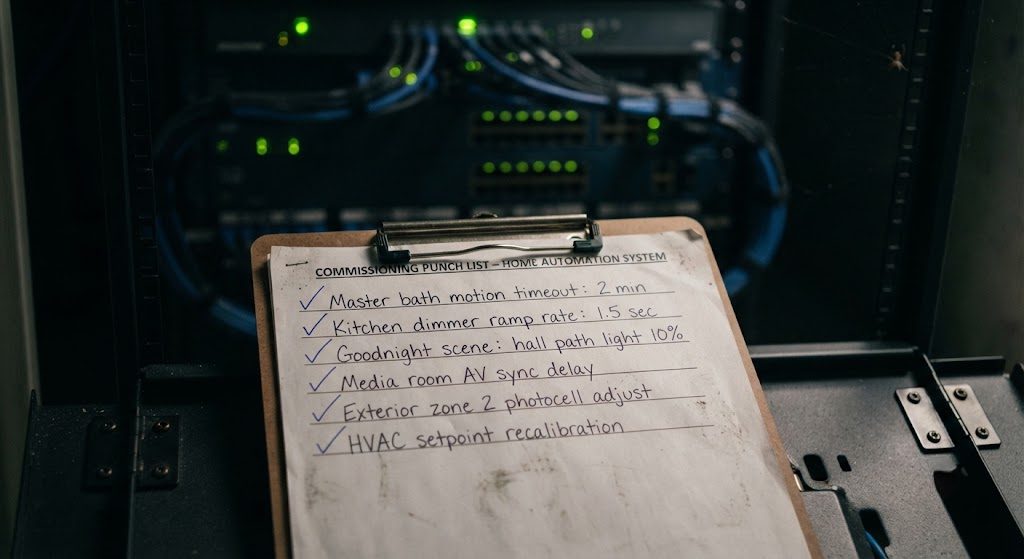
I once walked into a home where the "Goodnight" button turned off every light in the house. That was the spec. The problem? It also plunged the hallway outside the kids' bedroom into total darkness, and their six-year-old was afraid of the dark. The integrator had met the requirement. They had not met the moment. A properly commissioned "Goodnight" scene leaves a path light at 10% for exactly that reason, because a real house has children who wake up at 2 a.m. looking for a glass of water.
Sensor Thresholds and the 3 a.m. Ghost
Motion sensors are the most common source of commissioning failure. They're shipped with default sensitivity settings that are almost always wrong for the installed location. Too sensitive, and the hallway light triggers every time the HVAC kicks on and ruffles a curtain. Not sensitive enough, and the laundry room stays dark while you're carrying a full basket. A well-commissioned sensor has been walked through its space at different times of day, with the occupancy timeout adjusted to the room's purpose—30 seconds for a powder room, 15 minutes for a living room. This tuning takes hours. It's also invisible. No client will ever thank you for it, because a properly tuned sensor is one they never think about. They'll only notice if it's wrong.
Who Does the Work, and How You Know
The difference between a commissioned system and an installed one is always the same thing: documentation. A commissioned system comes with a labeled floor plan showing every device address, a logic document explaining every scene trigger and condition, and a handover walkthrough where the integrator stands in the house with the homeowner and adjusts every scene in real time. An installed system comes with a stack of manuals and a business card.
The Three Questions to Ask Your Integrator
Before you sign the final check, ask these three things. First: "Show me your commissioning checklist." If they don't have one, they don't have a process. Second: "Walk me through every scene and let me change something right now." If the answer takes more than 30 seconds per scene, the programming is buried too deep. Third: "Give me the logic document that another integrator could use to service this system five years from now." If they hesitate, you're locked into one company forever, and that's a liability, not a relationship.
The hardware is what you buy. The commissioning is what you live with. The smartest homeowners I've worked with understand that the real product isn't the processor—it's the first Tuesday evening after the integrator leaves, when the house does exactly what it's supposed to do without being asked. That moment is bought in hours of tuning, not in dollars of equipment. Make sure the contract reflects that, because the spec sheet never will.