
A 2 wire smart thermostat sounds simple, and sometimes it is. In the right house, it can be the cleanest way to add scheduling, remote access, and better temperature control without tearing open walls. In the wrong house, it becomes a weak link that looks modern on the wall but behaves like a compromise behind it. The difference is usually not the thermostat itself. It is the heating equipment, the transformer, and whether those two conductors are doing real work or barely enough work.
When I look at a 2 wire smart thermostat in a renovation, I start with a system question, not a product question. Two wires usually mean a basic heat call: one power leg and one call for heat. That works well on some boilers, furnaces, and zone valves. It does not automatically mean the wall is ready for a full-featured smart device, especially if the thermostat is expected to power Wi-Fi, a backlit screen, and internal relays at the same time.
The trouble starts when people assume every low-voltage thermostat is interchangeable. It is not. A conventional 24V heating circuit can be friendly to a smart control, but some systems are too sparse for the thermostat to live comfortably without help. If the device has to steal power through the heat circuit, it can create odd behavior: delayed calls, short cycling, dead batteries, or a screen that reboots every few months. That is why I treat a 2 wire smart thermostat as a system compatibility problem first and a convenience feature second.
What those two wires are actually doing
In most heat-only setups, the two conductors are doing two jobs at once. One side brings low-voltage power from the transformer. The other side completes the circuit when the thermostat asks for heat. On many older homes, that means a simple gas furnace, boiler, or zone control with no fan wire and no cooling wire. In that case, the thermostat is not orchestrating a whole HVAC platform. It is just opening and closing a circuit.
That simplicity can be a gift. Fewer functions mean fewer failure points, and a clean heat-only loop is often easier to stabilize than a half-upgraded system with abandoned conductors in the wall. But simplicity has a ceiling. If the equipment expects a constant common wire, or if the thermostat is trying to power itself from a tiny current path, the whole arrangement can get flaky. A 2 wire smart thermostat can still be the right answer, but only if the electrical path matches the job.
Where it works cleanly
The best-case scenario is a heat-only system with a stable low-voltage transformer and a thermostat that is designed for two-wire operation or includes the right adapter. I see that most often in older homes where the owner wants app control for a boiler zone or a simple wall heater and does not need fan control, cooling, or multi-stage logic. In that situation, the upgrade can be elegant. You get scheduling, occupancy-aware setbacks, and remote adjustment without turning the wall into a science project.
This is also where expectations matter. If you are trying to make a very basic heating loop behave like a whole-home automation panel, you are asking the wrong thing of it. A good 2 wire smart thermostat should improve convenience and consistency, not force a primitive system to pretend it is a full air handler. In a remodel, that distinction saves a lot of trouble later.
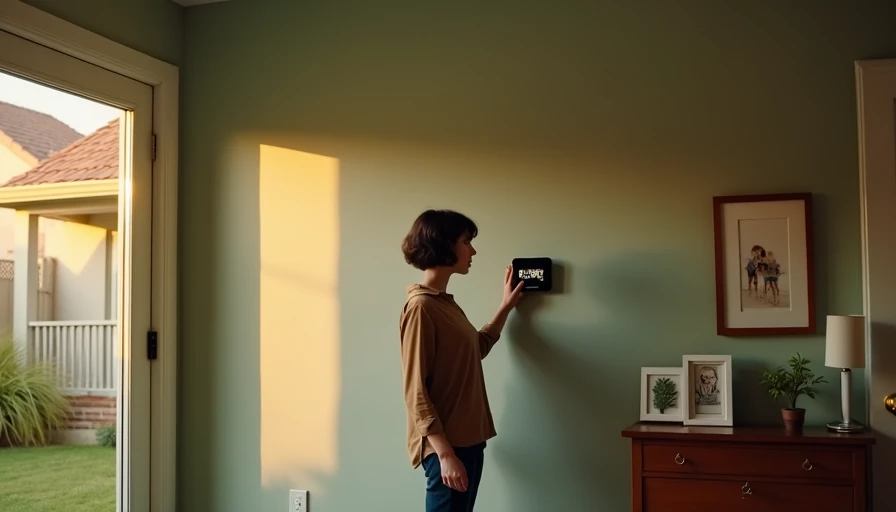
Where it breaks in year three
The failures I see are rarely dramatic on day one. They show up later, after the novelty wears off and the owner just wants the room to hold temperature without drama. Power-stealing designs can become noisy on old control boards. A weak transformer can struggle when the thermostat lights up, talks to Wi-Fi, and keeps its internal logic awake all day. Boilers and zone valves are especially good at exposing these weaknesses because they are simple enough to work with a dumb control and just finicky enough to punish a borderline one.
Another common problem is the one nobody talks about during the install: the wall cavity is not actually ready for the device people bought. Maybe the conductor gauge is marginal, maybe the run is long, maybe the old thermostat location had draft issues, or maybe the equipment was never meant to be “smart” without an interface module. That is where a 2 wire smart thermostat starts to look clever on paper and annoying in practice. Clients stop touching the fancy features when the room is never quite right.
What I do on a remodel
If the wall is open, I usually want a real cable, not a heroic workaround. Pull the right thermostat wire now, leave a spare conductor if the path allows it, and give the HVAC side a proper common when the equipment supports it. That is cheaper in time and frustration than trying to rescue a marginal two-wire setup after the drywall is painted and the owner is already annoyed by rebooting, missed calls for heat, or a screen that depends on luck.
If the wall is closed and you are not ready to open it, then the question becomes whether the existing equipment can support an adapter, a relay, or a different control strategy. Sometimes the answer is yes, and sometimes the honest answer is that the wall should stay simple. I prefer a boring thermostat that works every day over a flashy one that needs a weekly reset. That is not anti-smart. That is just good systems design.

The practical decision before you buy anything
Before you choose a 2 wire smart thermostat, I want you to know three things: what equipment is on the other end of the cable, whether it is heat-only or part of a larger HVAC system, and whether there is room to add proper power later. If the answer to those questions is fuzzy, do not let the wall become the place where the design gets figured out. Get the equipment labeled, trace the conductors, and make the thermostat decision after that.
There is a simple rule I use in the field. If the thermostat is just a room interface for a straightforward heating loop, two wires can be enough. If the thermostat is expected to power itself, coordinate more than one function, or compensate for an old installation, you are probably better off revisiting the wiring plan. That is especially true in a renovation, where it is easy to do the right thing once and hard to justify opening the wall again later.
A 2 wire smart thermostat can absolutely make sense. I use them when the system is honest about its limits and the control strategy stays inside those limits. The mistake is assuming the smart part fixes a weak electrical or mechanical setup. It does not. The right move is to design the wall around the equipment, not the marketing copy. If you do that, the thermostat disappears into the background, which is exactly where good infrastructure belongs.