
When homeowners search for blinds doors patio solutions, they are usually trying to solve three problems at once: glare, privacy, and access to a large glass opening. Patio doors are not ordinary windows. They move, they are wider, they often reach the floor, and they connect an interior room directly to changing light and temperature. Treating them like oversized windows usually creates an awkward result.
The right approach starts with the door, the room, and the way the home will be used. A sliding glass door in a west-facing family room needs a different treatment from a hinged French door opening onto a shaded courtyard. I have seen expensive renovations where the shades looked fine on installation day but blocked the handle, dragged across the floor, or became too annoying to operate by year three. Planning the system before drywall and trim are complete avoids those failures.
Start with the patio door, not the blind
The first decision is how the door moves. Sliding doors generally work best with a shade mounted above the opening, with enough clearance for the panels to travel freely. A wide roller shade can cover the complete opening, but it needs a clear wall or ceiling area and should not interfere with the sliding track. For a set of French or folding doors, individual shades often make more sense because each panel has its own swing path.
For blinds doors patio projects, measure more than the glass. Record the finished trim width, handle projection, frame depth, ceiling height, and the direction each panel opens. A pocket door may need a different mounting position from a surface-mounted slider. Also account for curtains, insect screens, and furniture. A sectional sofa placed too close to a door can prevent a shade from lowering evenly or make manual operation frustrating.
This is where a simple drawing is more useful than a product catalog. Mark the glass, hardware, shade stack, and furniture on the same plan. If the shade needs to stop several inches above a handle, decide that before ordering. Small details like these determine whether the finished installation feels integrated or improvised.
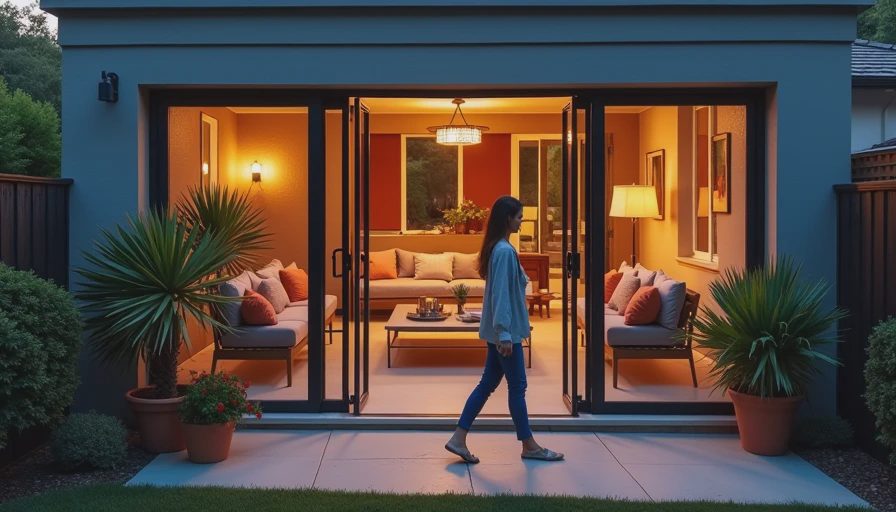
Choose the right shade type for light and privacy
Roller shades are usually the cleanest answer for patio openings. They stack into a compact tube, suit modern and traditional interiors, and can be specified in fabrics ranging from sheer sunscreen material to room-darkening blackout. Sunscreen fabric is useful in a living room because it reduces glare while preserving a view during the day. It does not provide complete nighttime privacy when the interior lights are on, so a layered treatment can be better for bedrooms or street-facing rooms.
Cellular shades provide strong insulation and a softer appearance, but their side channels and moving parts require careful detailing around a large door. Drapery can add warmth and texture, particularly in a dining room or primary suite, but it needs wall space for the panels to stack. For blinds doors patio installations, horizontal slatted blinds are often less practical because wide openings create heavy, visually busy assemblies and the slats can rattle near an open door.
The fabric openness factor matters. A lower openness shade blocks more view and daylight; a higher openness shade keeps the room brighter but gives up more privacy. Do not choose based only on a fabric sample held in a showroom. View the sample against the actual glass at noon and after sunset, with interior lights on. That is when the difference becomes obvious.
Plan motorization during the rough-in
A motorized shade is not automatically a smart shade. It becomes part of a useful system when it responds to a scene, schedule, sensor, or wall control without requiring a separate remote for every opening. For example, a patio door shade might rise with a morning scene, lower when afternoon glare reaches the room, and close at sunset for privacy. The homeowner should still have a local button nearby, because convenience should not depend on a phone or cloud service.
If the walls are open, ask the electrician or integrator to plan power and control locations before insulation. Hardwired motors can be a strong choice for frequently used, wide shades because they avoid battery changes and keep the headrail visually clean. Rechargeable motors can be sensible when wiring would require finished-wall damage. The decision depends on access, shade size, and how often the opening will operate.
For blinds doors patio planning, leave service access in the design. Motors eventually need inspection, fabrics need cleaning, and batteries do not last forever. A valance buried behind fixed millwork may look elegant until a technician cannot reach it. A removable panel or accessible pocket is a small architectural concession that saves time later.
Connect shades to light, climate, and security
The strongest reason to integrate patio shades is not gadget appeal. It is that the opening affects several systems at once. West-facing glass can add significant afternoon heat, forcing the air conditioner to run harder. A shade scene can reduce that load before the room becomes uncomfortable. A security or away scene can close exposed openings while keeping selected interior lights active.
Use sensors intelligently. A daylight sensor can respond to changing conditions better than a rigid clock schedule, especially during winter and summer. A temperature sensor can support a climate strategy, but it should not make rapid adjustments that constantly move the shades. Frequent cycling is hard on motors and quickly teaches residents to disable automation.
A good system also understands occupancy. If the family room is occupied, the shade may stop at a glare-reducing position rather than close completely. If the home is empty, full closure may make more sense. This kind of logic is more useful than a demonstration where every shade moves at once. For blinds doors patio projects, the goal is quiet assistance: the room should feel comfortable without anyone thinking about the equipment.

What tends to fail after installation
The most common failure is choosing one treatment for every opening. A sheer roller shade may look consistent across a house, but it can leave a bedroom exposed at night. A blackout fabric may solve privacy while making a daytime living room feel closed. Grouping every patio door into one scene can also create poor results when one room is occupied and another is empty.
Another problem is underestimating fabric weight and opening width. Large shades need appropriate brackets, level mounting, and motor capacity. If the tube bows or the fabric tracks unevenly, the issue is usually installation planning rather than a setting in the app. Battery-powered units are also often placed where reaching the charging port requires a ladder and furniture removal. That is not a sustainable maintenance plan.
I also recommend testing the control experience with the people who will actually use the room. If lowering the shade requires opening an app, selecting a room, finding a device, and choosing a percentage, most occupants will use the wall switch instead. Name scenes by purpose, such as “Movie,” “Afternoon,” or “Away,” and keep the number of choices manageable.
A practical specification checklist
Before approving a blinds doors patio order, document the following items:
- Identify whether each opening slides, swings, folds, or pockets into the wall.
- Confirm finished dimensions, trim depth, handle clearance, and shade stack locations.
- Choose the privacy level separately for daytime and nighttime use.
- Decide whether the room needs glare control, heat reduction, blackout, or all three.
- Select hardwired, rechargeable, or replaceable-battery motors based on access and usage.
- Provide a local wall control in the room, even when a full automation system is planned.
- Define scenes for morning, evening, away, and entertainment without over-automating movement.
- Leave a service path to every motor, power supply, and control component.
The final check should happen with furniture shown on the plan. A shade that operates perfectly in an empty room can become unusable once a sectional, console, or dining chair is installed. For blinds doors patio decisions, that last coordination step often separates a clean result from an expensive compromise.
A patio door is part of the architecture, not an accessory added after the room is finished. When its shade is sized correctly, wired thoughtfully, and connected to lighting and climate scenes, the result feels calm and almost invisible. That is the standard I aim for: fewer remotes, no blocked hardware, and a room that stays comfortable through changing sun. If you are still in design or rough-in, bring the door schedule and reflected ceiling plan to your integrator now. The best time to solve blinds doors patio details is before the walls close.