When homeowners search for bathroom lighting upgrades near me, they are usually looking for more than a new fixture. They want a bathroom that feels calm in the morning, works precisely at the mirror, and does not become a collection of switches, sensors, and mismatched color temperatures. The best result starts with the lighting system, not the shopping list.
I have seen beautiful bathrooms undermined by one common decision: treating every light as if it serves the same purpose. A ceiling downlight cannot replace flattering mirror light. A bright vanity bar should not be the only source used during a late-night visit. Good design separates tasks, moods, and times of day while keeping control simple enough that everyone actually uses it.
Start with the layers of bathroom light
A well-planned bathroom generally needs three lighting layers. Ambient light provides the overall illumination, usually through recessed fixtures, a flush mount, or concealed cove lighting. Task light belongs at the vanity, where shadows under the eyes and chin can make shaving, makeup, and grooming needlessly difficult. Accent light adds depth around a tub, architectural wall, niche, or floating vanity.
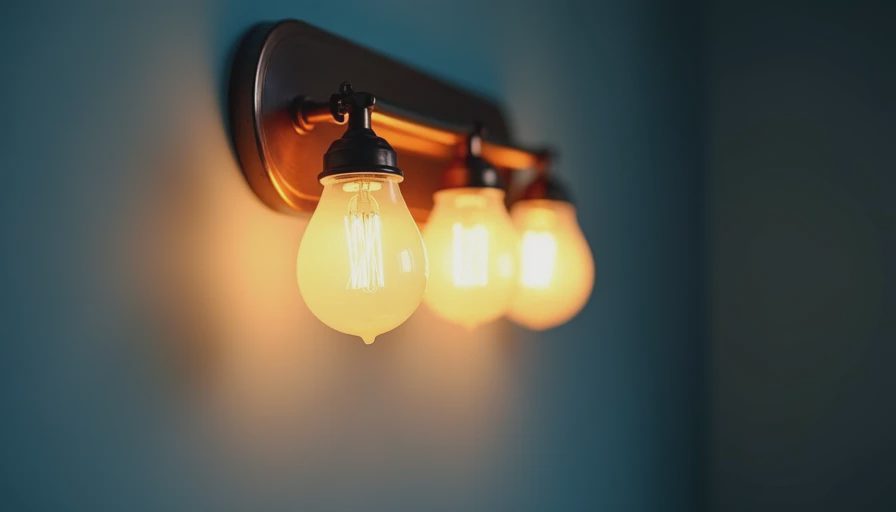
The mistake is placing one bright fixture in the center of the ceiling and calling the room finished. That creates strong overhead shadows and a clinical feeling. Instead, mirror lighting should come from both sides when possible, with a fixture or integrated source positioned near face height. A backlit mirror can look clean, but it should be evaluated carefully; some models produce enough light for ambiance but not enough for detailed grooming.
Color temperature matters as well. A warm 2700K setting can make stone and wood feel inviting, while a neutral 3000K source often gives better clarity at the vanity. The important point is consistency. A 2700K ceiling light beside a cool blue mirror can make skin tones and finishes look disconnected.
What to ask when comparing bathroom lighting upgrades near me
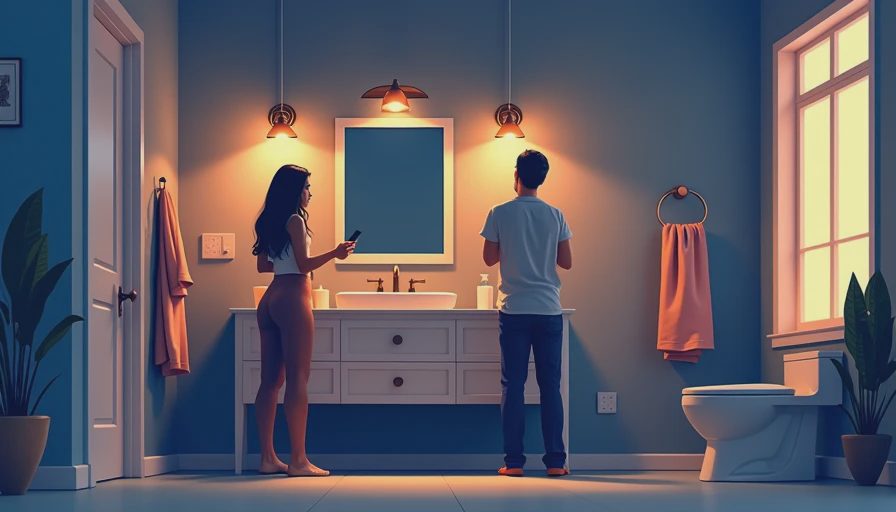
A local search for bathroom lighting upgrades near me will return electricians, lighting showrooms, remodelers, and smart-home integrators. Those providers may all be useful, but they do not solve the same problem. Before accepting a recommendation, ask who is responsible for the lighting plan, who coordinates with the electrician, and who will commission the controls after installation.
You should also ask to see the proposed switching logic. A plan that says “vanity,” “ceiling,” and “shower” is only a starting point. The more useful question is what happens when someone enters the room at 6:00 a.m., when guests use the bathroom, or when the homeowner wants full brightness for cleaning. The system should answer those situations without requiring a hunt through four unlabeled buttons.
For a renovation, confirm the wiring before drywall closes. Dimming capability, neutral conductors, fixture compatibility, driver access, and low-voltage control wiring can all affect the final result. If the bathroom is being opened anyway, this is the time to make the infrastructure deliberate rather than trying to retrofit intelligence later.
Build scenes people will actually use
Smart lighting becomes useful when it reflects real routines. A morning scene might bring the vanity and ambient lights to a comfortable level, while keeping the shower area clear and bright. An evening scene can reduce the ceiling light and leave a gentle path light near the floor. A cleaning scene can activate every fixture at full output so grout lines, corners, and glass surfaces are easy to inspect.
The controls should remain understandable. A wall keypad with labeled scenes is often better than a phone app, especially in a bathroom where hands may be wet. An occupancy sensor can turn on a low-level night setting, but it needs thoughtful placement and timing. If the timeout is too short, the room goes dark while someone is showering. If it is too long, the light stays on after a quick visit and becomes irritating.
This is where bathroom lighting upgrades near me should be evaluated as part of the larger home. If the same lighting platform controls the hallway, bedroom, shades, and climate, a nighttime bathroom visit can avoid waking the rest of the house. The feature is not “smart” because it connects to Wi-Fi; it is smart because it removes friction from a familiar routine.
Plan for moisture, maintenance, and the third year
Bathrooms are demanding environments. Fixtures, drivers, sensors, and exhaust fans all live around humidity, cleaning products, and temperature changes. Use products rated for their intended location, and keep accessible drivers or transformers out of areas where future service requires removing tile or millwork. A sleek installation that cannot be repaired without demolition is not a successful installation.
Ask where replacement parts will come from five or ten years later. Integrated LED fixtures can be excellent, but their performance depends on driver quality and serviceability. In some cases, a replaceable lamp provides a more practical long-term solution. The right choice depends on the architecture, ceiling access, and how committed the homeowner is to a particular visual profile.
During consultations for bathroom lighting upgrades near me, I also look for controls that will survive normal use. A wireless button attached with adhesive may be acceptable in a temporary installation, but a major renovation deserves properly mounted controls and clear documentation. Label the electrical panel, record the fixture specifications, and leave a simple explanation for the next homeowner or service technician.
Coordinate lighting with ventilation and shades
Lighting should not be designed in isolation. A bathroom with a skylight or large window may need different scenes at noon than it does before sunrise. Motorized shades can reduce glare at the mirror, provide privacy, and allow daylight to contribute without making the room too bright. The control logic should respond to time and sunlight without forcing the homeowner to manage every adjustment manually.
Ventilation is part of the same comfort equation. A humidity sensor or coordinated exhaust strategy can help clear steam after a shower, while the lighting scene returns to normal once the room is unoccupied. This does not require an elaborate dashboard. A discreet sensor and a reliable automation routine are usually better than a visible tablet mounted near the sink.
When reviewing bathroom lighting upgrades near me, ask whether the installer understands these dependencies. The electrician may handle power, the builder may handle framing, and the integrator may handle scenes. Someone must still own the handoff between them. Poor coordination is how a mirror blocks a sensor, a shade pocket conflicts with a light, or a switch ends up behind a door.
A practical design process for your renovation
Begin with a room plan showing the vanity, mirror, shower, tub, toilet, door swing, windows, and storage. Mark where light is needed rather than where a fixture happens to fit. Next, define the five situations the room must support: waking up, grooming, showering, relaxing, and cleaning. Assign light levels and color temperature preferences to each one.
Then review fixture dimensions, beam spread, dimming performance, and access for maintenance. Request a reflected ceiling plan and control schedule before ordering decorative pieces. The documents do not need to be complicated, but they should show what turns on, how it dims, and what happens during a power or network interruption.
Finally, commission the room at night and during daylight. Stand at the mirror, sit in the tub, and walk in from the hallway. Test wet hands, occupancy timing, scene buttons, and manual overrides. If you are comparing bathroom lighting upgrades near me, choose the provider who explains these tests rather than only showing attractive fixture photos.
A bathroom can be one of the most rewarding rooms to upgrade because small improvements are felt every day. Start with light quality and control logic, coordinate the wiring before the walls close, and choose technology that remains useful after the novelty disappears. That is how bathroom lighting upgrades near me become a finished system instead of another row of switches.