I tell every new client the same thing on our first call: a smart home is not a house full of smart gadgets. Most people hear that and nod politely, then ask which smart thermostat they should buy. That impulse—start with a product, then figure out how it fits—is exactly why so many smart homes end up as expensive collections of incompatible devices that nobody uses after month three.
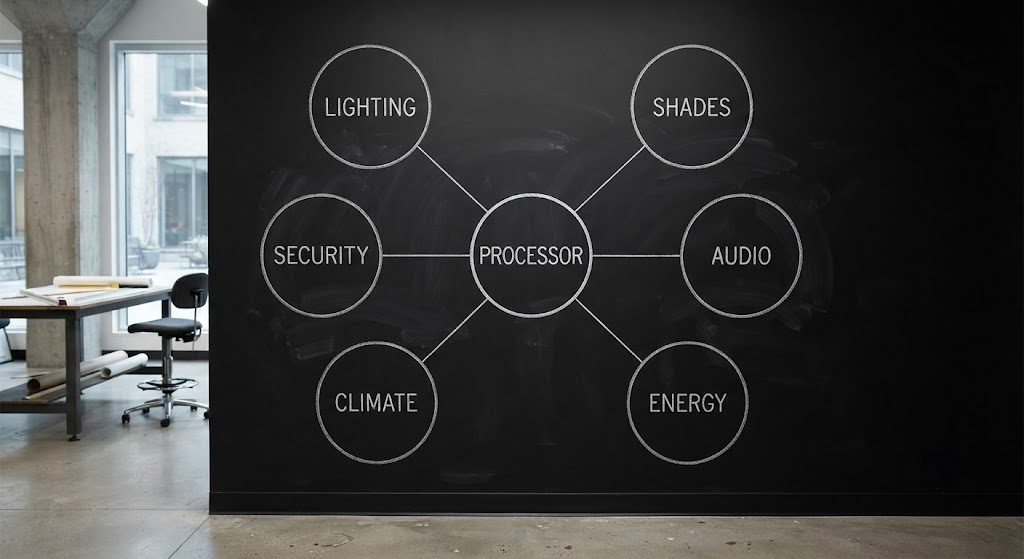
A real smart home is a system. Six subsystems—lighting, climate, security, motorized shades, whole-home audio, and energy management—running through one brain. The brain makes decisions. The brain knows that when the security system arms at midnight, the shades should already be down, the thermostat should shift to sleep mode, and every light in the house should be off except the path to the master bedroom. That's not three apps and a voice command. That's one scene, triggered automatically, every single night.
What Whole-House Integration Actually Means
When I was a product manager at Control4, I watched dealers sell "smart homes" that were really just five subsystems in a trench coat. A Lutron switch here, a Sonos speaker there, a Nest on the wall, a Ring doorbell at the front door. Each one worked fine alone. Together, they didn't work at all. The homeowner had four apps, three hubs, and a growing sense that they'd been sold a bill of goods.
Integration means the subsystems talk to each other on purpose. The motorized shade knows the sun angle. The HVAC knows which rooms are occupied. The audio system knows when the security system triggers. One processor coordinates all of it, and one interface—usually a keypad on the wall or a single app—controls it. No app juggling. No "why won't this connect?" moments at 10 PM.
The Question That Matters at Rough-In
Before drywall goes up, there's exactly one window to install the low-voltage backbone that makes integration possible. I walk every job site with the electrician and ask the question they never ask: "Where do you want the brain?"
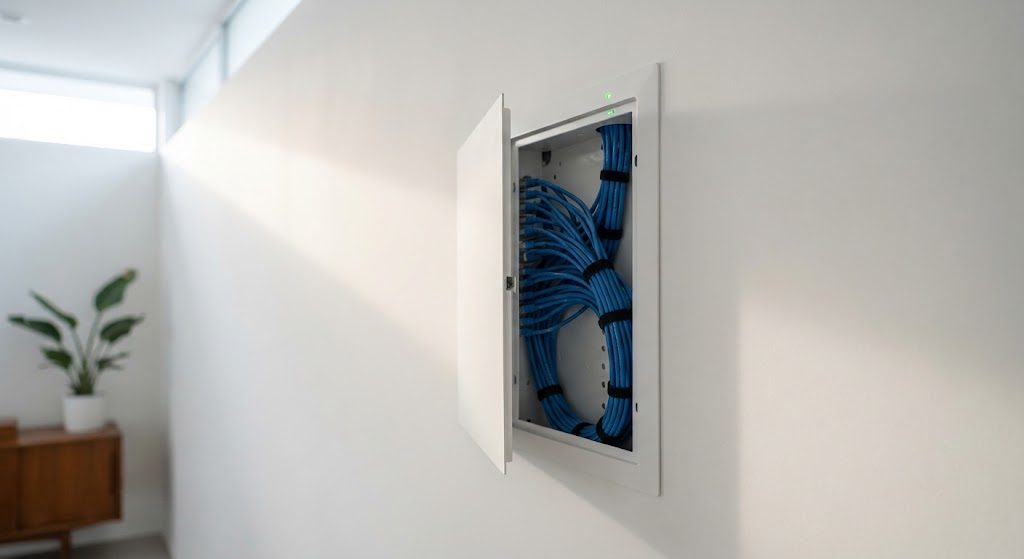
That brain lives in a structured wiring panel or a small rack, usually in a utility closet or basement. From that panel, Cat6 and speaker wire radiate out to every room like a nervous system. Hardwired connections for the things that can never drop—security cameras, access points, the processor itself. Wireless for the things that move or don't need constant chatter.
The difference between a house wired for integration and one that isn't isn't about gadgets. It's about the dozen decisions made during rough-in that determine whether the system works for fifteen years or frustrates you after fifteen days.
The Expensive Way vs. The Smart Way
Here's the pattern I've seen across 200 homes in Los Angeles County. A homeowner buys a smart speaker, then a smart thermostat, then a video doorbell. Six months in, they've spent several thousand dollars and nothing talks to anything else. They call a firm like mine to sort it out. By then, the walls are closed, the low-voltage backbone was never installed, and I have to build workarounds on top of workarounds. That's the expensive way.
The smart way is cheaper, but it requires patience. Spend the first phase of your project thinking about scenes, not gadgets. Describe the way you want the house to feel on a Tuesday evening—what lights are on, what temperature it holds, what music plays, how the shades respond to the sunset. Work backward from that experience to the infrastructure that enables it. Buy the brain first, then the devices. That's whole-house thinking.
A smart home isn't something you buy. It's something you design. The difference determines everything else.