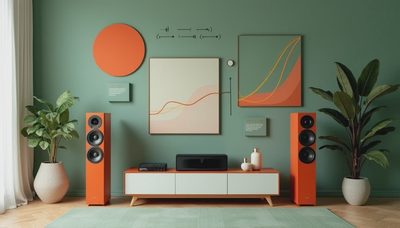
Surround sound systems are often treated as a shopping list: a receiver, several speakers, and a subwoofer. That approach works in a temporary media room, but it usually falls short in a renovated or newly built home. The better question is not which speakers to buy. It is how the room should sound, look, and behave when nobody is thinking about the technology.
I have seen beautiful rooms weakened by visible cables, poorly placed speakers, and controls that require three remotes. I have also seen modest rooms become genuinely enjoyable because the design began with seating, sightlines, wall construction, and daily habits. A successful system disappears into the architecture while remaining easy to use.
Start with the room, not the equipment
The seating position determines almost everything. If the main sofa is pressed against the back wall, rear effects cannot create a convincing sense of space. If the television is mounted above a fireplace, the center speaker may be forced too high, which makes dialogue sound as if it is coming from above the actors. These are room-planning problems, not equipment problems.
Before selecting surround sound systems, mark the primary seats on the floor plan. Identify the television or projector wall, side walls, windows, doors, fireplaces, and likely furniture. A room that is 14 by 20 feet has different acoustic needs from a large open media lounge connected to a kitchen. The number of seats matters, too. One carefully optimized viewing position is easier to serve than three rows of furniture spread across a wide space.
Think about lighting at this stage. Recessed fixtures directly above the screen can create glare, while dimmers that are separate from the entertainment controls make movie nights feel unnecessarily complicated. Audio, lighting, shades, and climate should be considered as one experience.

Wiring is the part you cannot easily redo
The most valuable time to plan surround sound systems is before insulation and drywall. Run speaker cable to every intended location, even if some channels will not be used on day one. Include locations for left, center, right, side, and rear channels, along with one or more subwoofer positions. Prewire extra conduit from the equipment location to the display wall so future video standards or network changes do not require opening finished surfaces.
Cable routing should be documented with photographs before the walls close. Label both ends, keep power and signal paths sensibly organized, and leave service access around amplifiers and network equipment. A rack buried in a closet with no ventilation becomes a maintenance problem. So does a receiver installed in a tight cabinet where heat cannot escape.
Do not forget the ceiling. Height speakers can add convincing overhead information, but only when their placement relates to the seats below. A random grid of ceiling speakers is not the same as an immersive layout. Coordinate speaker backboxes, lighting cans, HVAC registers, and framing before any trade begins cutting holes.
Acoustic performance beats a bigger specification sheet
More channels do not automatically produce better sound. Hard floors, bare glass, and large unupholstered surfaces create reflections that blur dialogue and make music tiring. You do not need to turn a living room into a recording studio, but you do need to control the first reflections around the listening area.
A rug, substantial curtains, upholstered furniture, and a few well-placed acoustic treatments can make a dramatic difference. Treatments should support the room design rather than announce that a theater has been installed. In a multipurpose room, fabric wall panels, bookshelves, and architectural wood slats can provide useful diffusion while preserving the intended character.
The subwoofer deserves special attention. Low frequencies interact with room boundaries and can sound boomy in one seat and weak in another. Two smaller subwoofers placed strategically often provide more even bass than one larger unit in a convenient corner. Calibration can improve the result, but it cannot correct every poor placement decision.
Control should be simpler than the technology
The system will be judged by the person who uses it on an ordinary Tuesday, not by the installer during commissioning. A homeowner should be able to start a movie, adjust volume, pause playback, and return to normal television without remembering input names or amplifier zones.
This is where surround sound systems benefit from integration with the rest of the home. A single scene can lower the shades, dim the lights, set the climate to a comfortable level, wake the display, and select the correct source. Pressing one button should not launch a troubleshooting exercise. For guests, clear labels and a simple primary remote matter more than access to every advanced setting.
Build in sensible defaults. When the television turns on, the system should select the expected audio path. When the room is idle, equipment should enter an appropriate standby mode. If the network goes down, basic local control should remain available. These details are not glamorous, but they determine whether the room is used after the novelty fades.

Choose performance for how you actually watch
A dedicated theater can justify a more precise layout, acoustic treatment, and concealed equipment. A family room usually needs flexibility. The best surround sound systems for a family room might prioritize clear dialogue at moderate volume, reliable television integration, and controls that children and guests can understand.
Consider content, too. Streaming movies, live sports, music, and gaming place different demands on the room. Sports benefit from intelligible commentary and broad coverage. Films benefit from quiet backgrounds, directional effects, and controlled bass. Music often exposes tonal imbalance more quickly than television does. The design should reflect the content you actually consume rather than an impressive specification you rarely use.
A soundbar can be the right answer in a compact room or a home where visual simplicity matters most. It is not a failure to choose less equipment. The wrong answer is installing a complex array that conflicts with the architecture and becomes frustrating to operate. Good design is measured by the experience, not by the number of boxes.
Plan for year three, not just move-in day
Every home changes. Furniture moves, children grow, equipment ages, and streaming services change. Leave accessible pathways for service, provide network capacity near the equipment, and keep documentation with the home records. A labeled drawing and a few installation photographs can save hours when a component needs replacement years later.
Ask what happens if the primary receiver fails. Can the television still produce sound? Can a technician reach the wiring without removing cabinetry? Can the system be updated without replacing every speaker? These questions reveal whether the installation is a durable part of the home or a collection of hidden dependencies.
When I design surround sound systems, I aim for a room that feels calm before it is turned on and natural once it is running. The technology should support conversation, movie nights, and music without demanding attention. Start with the floor plan, wire before drywall, manage the acoustics, and simplify control. That sequence produces a result you will still want to use years after the renovation is complete.